Alumni Spotlight: Dr. Tyrone C. Howard
A conversation with Dr. Tyrone C. Howard on his new role as editor of the Multicultural Education Series
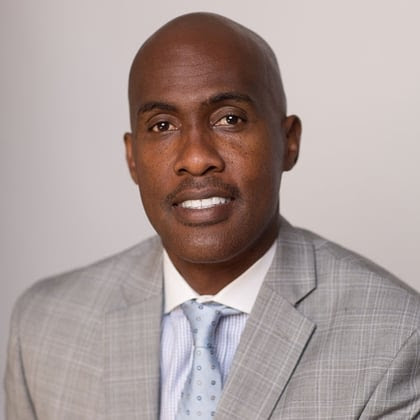
In this Q&A, Dr. Tyrone C. Howard (Ph.D. '98, Curriculum & Instruction; advisor: Dr. James A. Banks) reflects on his journey into education, his decades-long relationship with founding series editor Dr. James A. Banks, and what it means to take the helm of the Multicultural Education Series at Teachers College Press as it marks its 30th anniversary. In his responses, he shares what drives his commitment to justice in education, the voices he hopes to elevate through the series, and what keeps him grounded outside of his work.
About Dr. Howard
Dr. Howard is the Pritzker Family Endowed Chair in Education to Strengthen Children & Families, Director of the UCLA Pritzker Center for Strengthening Children & Families, and a professor of education in the School of Education & Information Studies at UCLA. A Member of both the National Academy of Education and the American Academy of Arts & Sciences, he is a leading scholar on race, culture, and educational equity.
What first pulled you toward education—and what does your journey into the field look like in your own words?
I was first pulled into the value of education by my parents. They both stressed the importance of education. My dad and mom were both avid readers and learners. I was told early on in life to get as much education as you can, because it is something that can never be taken away from you. I got into education as a career field early, because I saw it is one of the most profound professions to enact change, shape the future, and to inspire young minds.
Looking back on your time at the UW and your work with Dr. James Banks, what moments or lessons continue to stay with you?
Dr. Banks was a huge influence in my professional life. I followed his work for years before actually meeting him. When I met him, I realized how committed he was to education justice. He always stressed the importance of doing good work, staying true to your core values, and to always fight for change, justice and equality. He has been an avid supporter of mine for three decades, and I am forever grateful.
What does taking on the editorship of the Multicultural Education Series feel like for you right now?
Taking over the editorship of the Multicultural Education Series is truly an honor. For 30 years, it has been the premiere outline for scholarly works that address issues around equity, justice, and democracy. Jim Banks has done an incredible job of assembling some of the most amazing scholars in our field to build this series. The goals have been to provide research, theoretical, and practical knowledge about the behaviors and learning characteristics of students of color and other marginalized populations.
As you look ahead, what kinds of ideas or voices are you hoping the series continues to make space for?
I want to build on the legacy of Jim Banks by including the voices of established scholars as well as early career and mid career scholars. I will be looking for voices of scholars whose works inform our field, provide new ideas, depths, and insights on marginalized populations both domestically and globally.
Outside of all this work, what are the things—big or small—that bring you joy or keep you grounded?
Outside of my work, my family brings me joy. I have four grown children, and they, along with my wife are my biggest inspiration. But now I have three grandchildren, who are an even bigger inspiration. They keep me grounded, keep me young, and are a constant reminder of why I do the work that I do; to create a better world for them to live in.
