Get to Know Our EduDawgs: Lorenzo McCleese & Lizette Vazquez-Perez
Our “Get to Know Our EduDawgs” series celebrates the incredible undergraduate and graduate students who make up the UW College of Education community. Through student interviews and storytelling, we’re highlighting the passions, experiences, and perspectives that shape their journeys — in the classroom, in the community, and beyond. 🌎✨
Each story is a glimpse into what drives our future educators, researchers, and advocates to make a difference.
Editor's note: This story was written by student associate Winston N. through the College of Education’s partnership with Cristo Rey Jesuit Seattle High School.
Lorenzo McCleese & Lizette Vazquez-Perez: Opening Doors to Research
When Lizette Vázquez-Pérez and Lorenzo Roel Flores McCleese arrived at the University of Washington (UW), neither had a clear idea of how they would find their place in research. Both came from smaller communities in Washington, and both quickly learned that getting involved in undergraduate research could be difficult without the right connections.
Their experiences eventually led them to create Brothers & Sisters in Research (BSR), a program designed to help students from the Brotherhood Initiative and Sisterhood Initiative find undergraduate research opportunities, build skills, and connect with people who can help them take the first step.
For Lizette, who grew up in Yakima, Washington, research was something she knew she wanted to explore because of her long-term interest in medicine. She attended A.C. Davis High School, where she participated in the International Baccalaureate program, color guard, dance team, and ASB.
“I overdid myself,” she says. “I honestly don't recommend it. Don't do all of that.”
At the UW, she became involved with the Sisterhood Initiative, an experience she describes
as an important part of her college journey. Because she hopes to attend medical school,
research seemed like a natural opportunity to explore.
“I was like, I should probably do research. I'm at an amazing research university. If not here, where? If not now, when?”
She eventually joined a program connected to the Health Sciences Center Minority Students Program and the Office of Minority Affairs and Diversity. It gave her first experience with research and, more importantly, connected her with a mentor who helped her find her current research position.
For Lizette, that personal connection made a major difference. “Just having someone vouch for me, someone think and be like, ‘Oh, this would be a good person,’ and someone introducing me to someone,” she says.
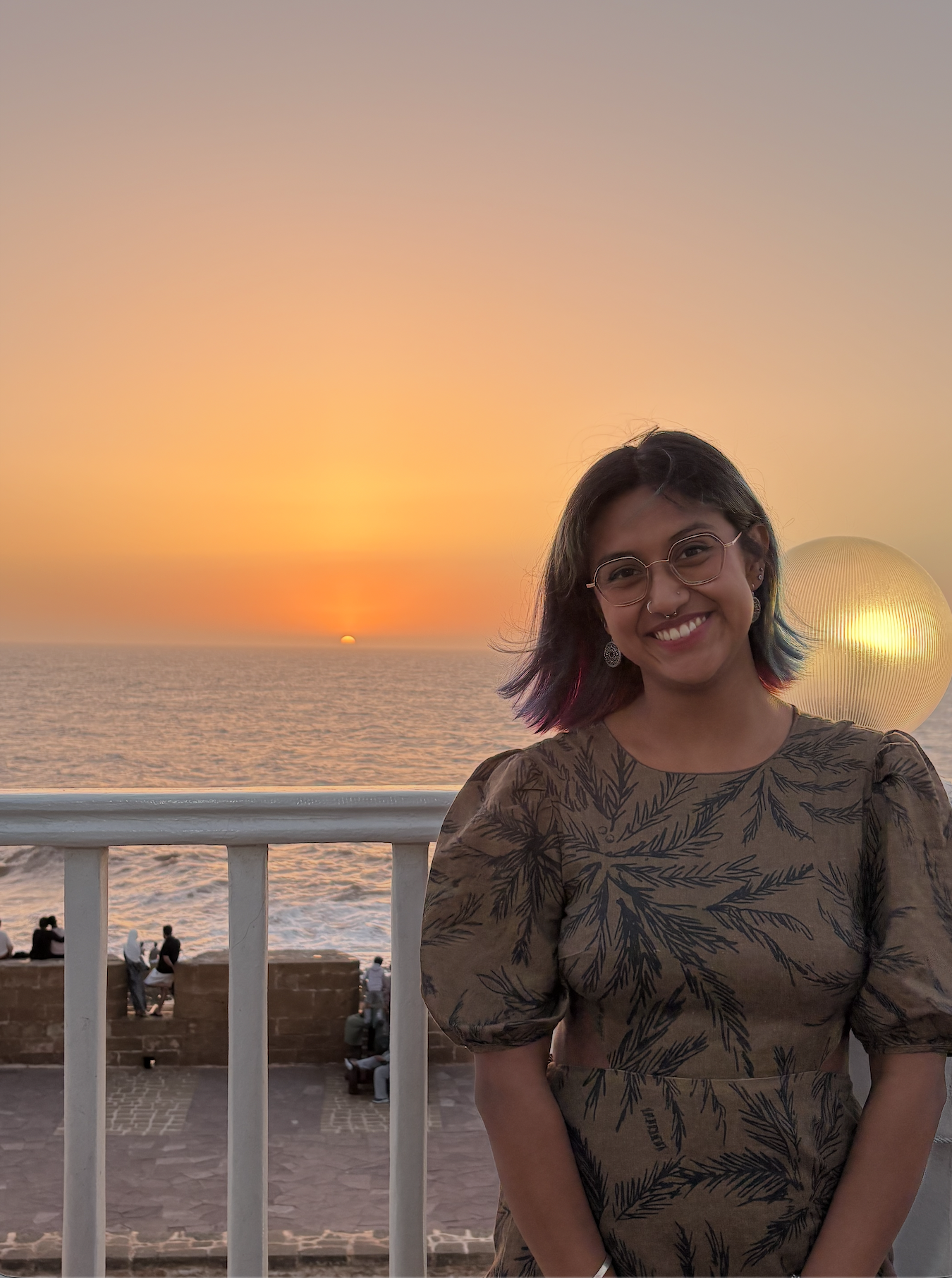
Lizette Vazquez-Perez
Neuroscience; circadian rhythms; fear entrainment; medicine and public health
Hometown
Yakima, Washington
Experience
Undergraduate researcher in a neuroscience lab studying fear entrainment and circadian rhythms; member of the Sisterhood Initiative; co-founder and co-leader of Brothers & Sisters in Research (BSR); supports students in finding research opportunities and making connections with mentors.
Inspiration
“My mom is truly an amazing woman. She has always been my number one supporter.”
Lorenzo had a similar experience, although his path into research looked different.
Originally from Port Townsend, Washington, Lorenzo grew up in a small rural community. Coming to the UW was overwhelming at first. The university's population was several times larger than his hometown, and he wondered how he could stand out among so many students.
“I was like, how am I going to stand out here?” he says.
He also did not know that research could be an option for him before college. During his first year, he attended a student panel hosted by the Office of Undergraduate Research during Dawg Daze. The panel introduced him to different ways students could get involved. He later spoke with a professor, applied for a research position, and was accepted. His sister even helped him create his first résumé.
“It was a good experience, but it was very confusing,” Lorenzo says. “A lot of things fell in place at the right time for me to get involved.”
That experience stayed with him. Lorenzo continued researching throughout his undergraduate career, moving from his first project to several others. He also joined the Brotherhood Initiative.
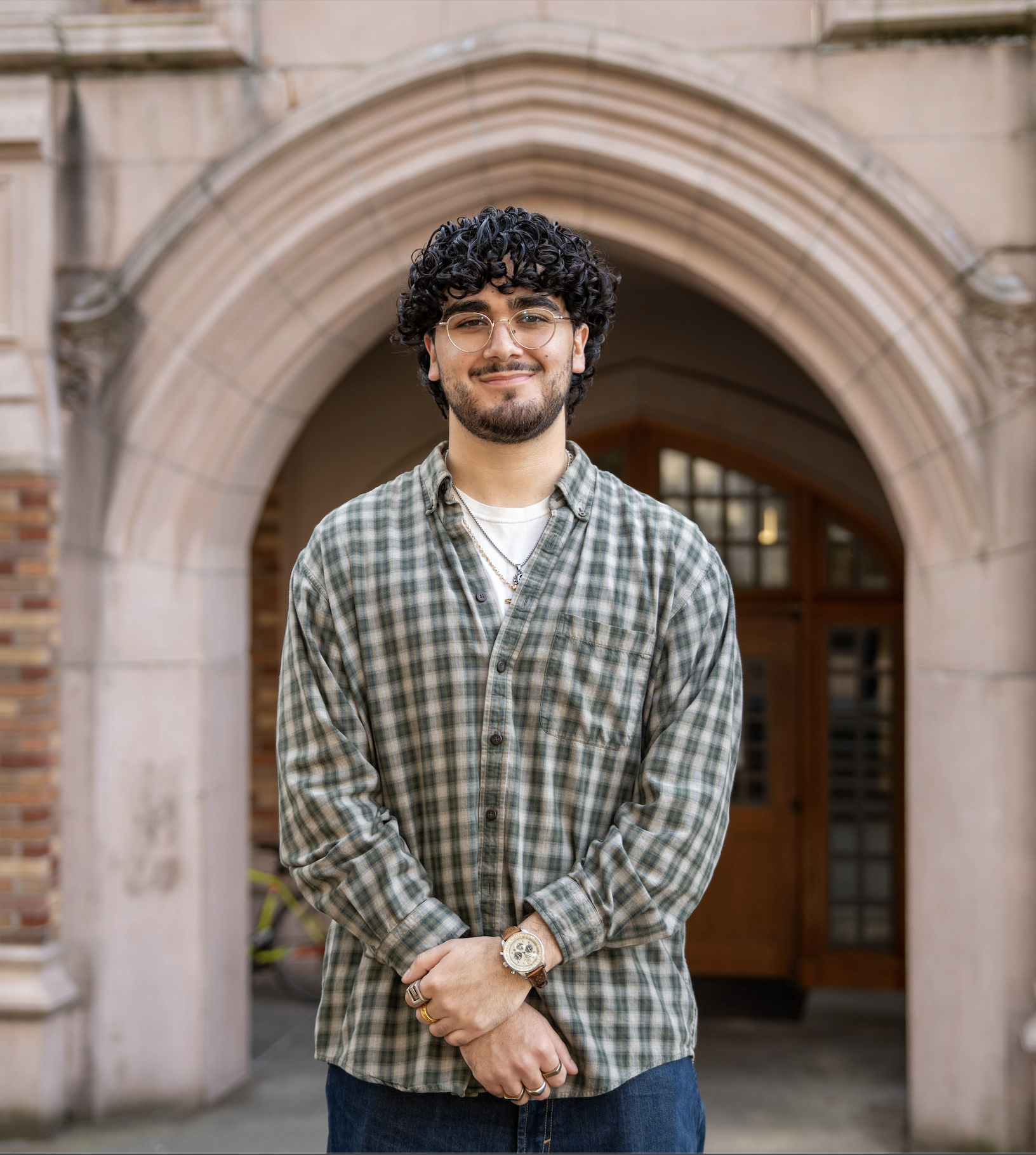
Lorenzo McCleese
Environmental Science and Informatics; computational fisheries; oceanography; climate change and coastal communities
Hometown
Port Townsend, Washington
Experience
Undergraduate researcher working on climate change, fisheries, and ocean ecosystems; research experience with the NOAA Alaska Fisheries Science Center, UC Davis, and the NOAA Southwest Fisheries Science Center; member of the Brotherhood Initiative; co-founder and co-leader of Brothers & Sisters in Research (BSR), helping students build skills and find research opportunities.
Inspiration
“My mom taught me how to navigate spaces that were never designed for either of us. ”
Before BSR existed, there was a student group called Brothers in Research. The group was created to help Brotherhood Initiative students learn how to get involved in undergraduate research.
Lorenzo participated as a first-year student. Although he had already found his first research position, the program helped him understand how to approach research and how to carry those skills into future opportunities.
The following year, Lorenzo watched his peer mentor lead the program and saw a challenge: attendance.
The program operated somewhat like a class, with weekly meetings and assignments, but without academic credit. Students who joined later could feel like they were already behind. By the end of the year, only a few students remained.
Lorenzo saw an opportunity to change the model.
He spent the summer rebuilding Brothers in Research into something more collaborative and accessible. Instead of making students feel like they were taking a class, he wanted the program to reach as many students as possible.
He also wanted to bring students from the Sisterhood Initiative into the program. After conversations with the leadership of the Brotherhood and Sisterhood Initiatives, Lorenzo connected with Lizette. Together, they developed what would become Brothers & Sisters in Research.
“I was thinking, if we're working with the Sisterhood now, I shouldn't be the only student lead,” Lorenzo says. “I need somebody to help out with this.” Lizette immediately understood the importance of the program because of her own
experience.
“Research seemed like something I should pursue. I’m at an amazing research university, so I should probably do research.”
Finding a way into research
Both Lizette and Lorenzo say that one of the biggest challenges students face is simply figuring out how to get through the door.
For Lizette, knowing someone who could vouch for her was one of the most important parts of getting her first opportunity. She says that without her mentor, she likely would have relied on cold emails or UW's undergraduate research opportunity database, where students compete for positions that are visible to a large number of applicants.
“It's incredibly hard to get involved in research,” she says. “The easiest way to get involved is knowing somebody.”
She also points to another challenge: many research positions require students to have already completed certain courses or have previous research experience. For students just starting college, that can create a cycle where they need experience to get research experience.
Lorenzo sees the problem as being larger than individual students.
“The systems to getting involved are inaccessible,” he says. He believes students can be expected to understand systems and expectations that may not be obvious to them. Even something as simple as knowing where to find a professor's website or how to contact a researcher can become a barrier.
The Office of Undergraduate Research provides resources for students, but Lorenzo says that a large university cannot provide extensive individual guidance to everyone. BSR is one way the two hope to fill that gap.
“It's community care,” Lorenzo says. “You kind of got to help people play the game by knowing somebody. And now we're somebody that students can know.” Once students have their first research experience, Lizette says, finding future
opportunities can become easier because they have something to put on their résumé and talk about in interviews.
Building a research community
BSR meets weekly for two hours in the Sisterhood Initiative and Brotherhood Initiative building. Each meeting focuses on a different part of the research process. Students might hear from undergraduate researchers, professors, or staff members from the Office of Undergraduate Research, the Career & Internship Center, or UW Libraries. Other meetings focus on practical skills, such as creating a résumé or CV, writing cover letters, finding summer research opportunities, reading academic papers, and conducting literature reviews.
The program also provides time for students to work individually, ask questions, and receive advice. Students receive weekly emails with research opportunities and information from the BSR network.
For Lizette and Lorenzo, the program is not only about helping students find a position. It is also about helping them figure out what they are interested in. “When someone comes in, and they're like, ‘I want to do research,’ the first question is, ‘What are your interests?’” Lizette says.
If students do not know yet, that is okay.
Research can involve biology, chemistry, and physics, but it can also include environmental science, social science, public health, and many other fields. Lizette and Lorenzo want students to understand that research does not have to fit one specific definition.
“Everything intersects,” Lorenzo says.
Research that reaches beyond the university
Their own research experiences have shaped how they think about the purpose of research.
Lorenzo works in computational fisheries and oceanography, studying how climate change affects fisheries, ecosystems, and coastal communities.
One of his projects with the NOAA Alaska Fisheries Science Center uses oral histories from Alaska Native, Indigenous, and rural communities to understand how climate change is affecting people's lives. He has also worked with researchers at UC Davis to identify areas that may be more resilient to climate change and with the NOAA Southwest Fisheries Science Center to study extreme marine events.
His current capstone builds on his work in Alaska. He hopes to interview communities there and combine those interviews with quantitative climate models.
For Lorenzo, the goal is to show that different forms of research can work together. “The whole point of those Alaska projects is to say, qualitative research and social science research are really important,” he says.
His experiences have also influenced his career goals. He hopes to eventually work for a federal agency such as NOAA, where research can inform policy and management decisions.
He is particularly interested in returning knowledge and resources to communities that are affected by climate change.
Lizette's research focuses on neuroscience. She works in a lab studying fear entrainment and circadian rhythms, exploring how the brain's biological clocks respond to changes in an individual's normal activity patterns.
Her work has also changed how she thinks about the accessibility of scientific knowledge. “Everything has to be written in such a way that makes it practically illegible to someone who doesn't know the topic,” she says.
Even as an undergraduate researcher, Lizette sometimes finds academic papers difficult to understand because of their specialized language. She hopes that one day she can help make scientific research easier for a wider audience to understand. “There is so much research out there,” she says. “We have so much knowledge. It's so inaccessible.”
That idea connects closely to what she hopes BSR can do: help students find an interest, learn how to explore it and become comfortable asking questions. “You have to start learning to learn,” she says. “That is what research is.”
Carrying the work forward
Neither Lizette nor Lorenzo has every part of their future mapped out. But both know that the experiences they have gained through research and BSR will stay with them. For Lorenzo, BSR taught him how to identify a problem and build an initiative to address it. He hopes to carry that framework into future work, whether in government, research, or equity-focused initiatives.
“I think it's a framework I want to continue wherever I go,” he says. Lizette is considering several possibilities, including medical school, graduate school, and other opportunities. She is interested in combining research with medicine and public health, particularly to support rural communities that may have limited access to health care.
No matter where their paths lead, both want their work to remain connected to the communities that shaped them.
Their own families are a major part of that motivation.
Lorenzo points to his parents, especially his mother, as an inspiration. He says she taught him how to navigate spaces that were not necessarily designed with people from their backgrounds in mind. He is also inspired by the communities that raised him and the resilience he has seen in the people around him.
For Lizette, her mother is her biggest inspiration. Her mother came to the United States without knowing English, worked in agriculture and construction, and eventually became a teacher in the Yakima School District. Lizette says her mother has started programs, been recognized for her work, and remained her strongest supporter.
“My mom is truly an amazing woman,” Lizette says. “She has always been my number one supporter.”
Her older sister, who is 12 years older, is another important source of support.
“They're my rocks,” she says.
For Lizette and Lorenzo, BSR is ultimately an extension of the support they received themselves. They both benefited from mentors, family members, and communities that helped them find opportunities they did not always know existed.
Now, they are working to make sure more students have someone in their corner when they are ready to take their first step into research.